


-

Add: HeBei ShengShi HongBang Cellulose Technology CO.,LTD.
-

Email
13180486930@163.com -

CONTACT US
+86 13180486930
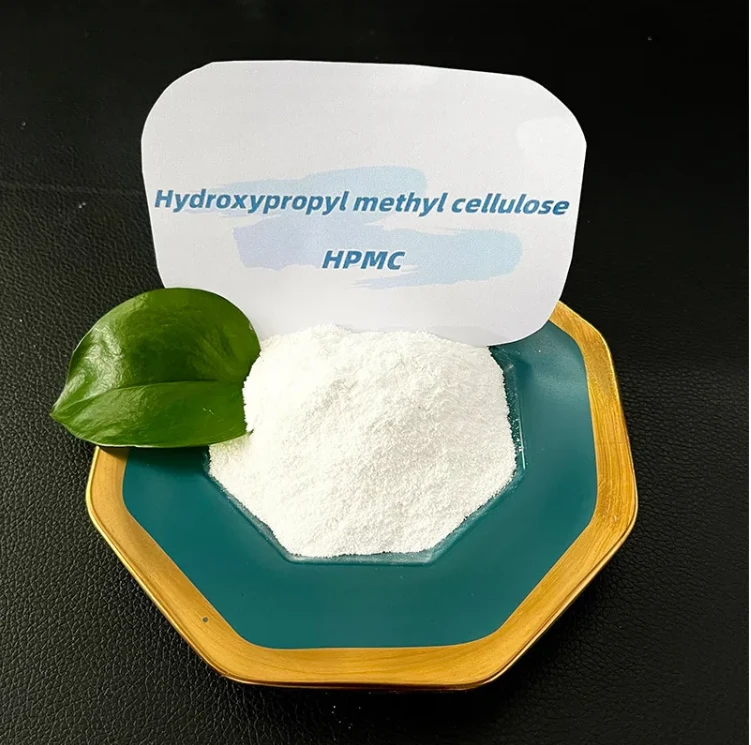


In the competitive realm of building materials and construction, the name HPMC easily resonates with industry insiders. HPMC, or Hydroxypropyl Methylcellulose, has a significant role, not just in construction, but also in other applications like pharmaceuticals and food products. However, the focus here is specifically on the construction product line and its branding identity, represented by the HPMC logo. The HPMC logo symbolizes innovation, quality, and reliability—a trifecta that every construction professional seeks. Through its unique visual identity, the HPMC logo encapsulates the essence of the brand, which is committed to enhancing the quality and longevity of construction projects globally. This symbolic representation differentiates it from competitors, offering a mark of excellence. Experience with HPMC products starts right from the visual interaction with its logo, often the first point of contact for potential customers or business partners. This logo becomes a beacon of trust . When adorned on packaging, brochures, or digital platforms, it assures clients of the consistent quality embedded in HPMC’s comprehensive portfolio of cellulose ethers, used extensively in cement, gypsum, and ceramics. For experts in the construction industry, the HPMC logo is a signifier of unparalleled expertise. Hydroxypropyl Methylcellulose has unique qualities such as water retention, thickening, and binding abilities, which are crucial in sustainable construction practices. The experts developing HPMC have engineered its products to perform efficiently under diverse environmental conditions, ensuring the stability and durability of constructions. Authoritatively, HPMC stands head and shoulders above others in the realm of cellulose ethers. Its logo is a testament to years of research and development. The technological advancements encapsulated by HPMC have been recognized by industry leaders, accrediting it as a go-to material for high-performance construction solutions. Its use in high-rise buildings, bridges, and other complex infrastructures underscores its authority in the field. The trustworthiness of the HPMC brand can be attributed in part to the consistent representation and quality assurance denoted by its logo. In an industry where safety and reliability are paramount, the HPMC logo comes to signify peace of mind. Construction professionals rely on this assurance, knowing that adherence to strict quality control protocols backs every product marked with the HPMC insignia. hpmc logo HPMC's products are not just made; they are crafted, with each batch being a testament to the company’s commitment to excellence. The meticulously designed logo is an assurance that whether you're working on small-scale renovations or large-scale infrastructural endeavors, the materials you use will perform to the highest standards. Additionally, the HPMC logo also plays a role in sustainable construction solutions. With increasing demand for environmentally responsible building practices, products bearing the HPMC logo are often formulated to reduce environmental impact. This contributes significantly to LEED certifications and other green building standards, enhancing the credibility of projects and ensuring compliance with global sustainability goals. In essence, the HPMC logo does far more than signify a product line—it tells a story of dedication to performance, innovation, and integrity. It is an emblem that carries forward the core values and unparalleled standards of HPMC, offering an edge in the competitive market landscape. The brand's commitment to research and development further underpins its potential to lead in innovative solutions, continually setting standards for quality in the construction industry. The symbiotic relationship between the HPMC logo and its promise of quality underscores a value proposition that competitors aspire to—and customers trust unwaveringly. Builders, architects, and contractors around the globe look to this symbol with confidence, knowing that the materials they choose will deliver exceptional performance, project after project. Overall, the HPMC logo not only reflects the company's expansive expertise and authoritative standing in the industry but also reinforces its commitment to reliability and trustworthiness. It represents a blend of technological innovation and proven performance, making it a vital asset to construction professionals worldwide.
- 40000tons

Production
- 20+years

Experience
- 5000+㎡

Acreage

-

In the dynamic world of industrial applications, the need for reliable and effective thickening agents has never been more pressing. Hydroxypropyl methylcellulose (HPMC) emerges as a superior choice, presenting its unmatched capability to enhance the texture, stability, and performance properties of diverse products. Here's a comprehensive examination, backed by professional insights and user experiences, positioning HPMC as a thickening agent of unparalleled reliability and efficacy. HPMC is synthesized through the chemical modification of cellulose, one of the most abundant natural polymers. This backbone provides HPMC with both biodegradability and biocompatibility, making it a preferred choice over synthetic alternatives. The versatility of HPMC is evident in its widespread application across industries such as pharmaceuticals, food production, personal care, and construction materials. From an expert perspective, HPMC’s ability to act as a thickening, gelling, and stabilizing agent is attributed to its unique molecular structure. The molecule's hydrophilic nature facilitates its interactions with water, allowing it to form viscous solutions even at low concentrations. This characteristic is particularly beneficial in the food industry where consistency and mouthfeel are crucial. For instance, in products like sauces and dressings, HPMC ensures a smooth texture and improves shelf stability, meeting both manufacturer and consumer standards. Practical experiences reinforce HPMC's user-friendly nature and adaptability. For formulators in pharmaceuticals, the precision with which HPMC can be controlled is invaluable. It not only aids in the controlled release of active ingredients in drug formulations but also ensures the stability of active compounds, protecting them from environmental degradation. Moreover, in the realm of personal care, HPMC's non-ionic nature makes it compatible with a wide range of ingredients, including those that are sensitive to pH changes or ionic strength. Personal care products, including lotions, creams, and hair gels, leverage HPMC for its ability to deliver a pleasant texture while maintaining product stability throughout its shelf life. hpmc thickening agent Construction materials heavily rely on HPMC to enhance the workability of products such as cement and plaster. By modifying the viscosity of these materials, HPMC optimizes adhesive properties and water retention, leading to improved application efficiency and durability. This is crucial for both the construction workers who appreciate the improved handling properties and the end-users who benefit from longer-lasting structures. Authoritative studies and industry testimonials have consistently affirmed HPMC’s reliability as a thickening agent . Research indicates that its application can lead to significant cost reductions by minimizing the need for multiple additives. Furthermore, its performance is consistent across different environmental conditions, offering a level of assurance that few other thickeners can match. Trust in HPMC is also cemented by its regulatory approval across major markets. It meets the stringent safety and quality standards laid out by authorities such as the FDA and the EFSA, making it a go-to ingredient for global brands looking to maintain compliance and consumer trust. In conclusion, Hydroxypropyl methylcellulose stands out as a thickening agent combining expert-recommended benefits with real-world performance. Its comprehensive application portfolio, supported by scientific validation and widespread regulatory approval, ensures that it remains a cornerstone in the formulation of high-quality, stable, and efficient products across industries. The decision to incorporate HPMC into product lines is not just a choice of an individual chemical but a strategic step towards sustainable and reliable formulation strategies.
-
Le HPMC 606, connu sous le nom de hydroxypropylmethylcellulose, est un polymère essentiel dans nombreux secteurs industriels, allant de la construction à la pharmaceutique. Ayant travaillé pendant plus d'une décennie dans le domaine des matériaux polymères, je partage ici des expériences, des connaissances et des conseils pour optimiser l'utilisation du HPMC 606, garantissant ainsi son meilleur rendement. Dans l'industrie de la construction, le HPMC 606 est salué pour sa capacité à améliorer la consistance et la performance des mélanges. Grâce à ses propriétés thixotropiques, il agit comme un agent épaississant et rétenteur d'eau dans les mélanges à base de ciment et de plâtre. Pour maximiser son efficacité, il est crucial de choisir la bonne viscosité et le poids moléculaire adapté aux besoins spécifiques du projet de construction. Une mauvaise sélection peut entraîner des temps de prise prolongés ou une résistance inférieure. Mon expérience montre que les formulations doivent être ajustées en fonction des conditions climatiques pour maintenir un équilibre optimal entre mouillage et adhérence. Le secteur pharmaceutique bénéficie grandement du HPMC 606, notamment dans la fabrication de comprimés à libération prolongée. Sa capacité à former des matrices géloïdes permet une diffusion contrôlée du médicament, améliorant ainsi la biodisponibilité et garantissant une libération uniforme. Pour les entreprises qui cherchent à obtenir une autorisation de mise sur le marché, la transparence sur la pureté et la stabilité du HPMC utilisé est cruciale. Assurez-vous de tester chaque lot pour prévenir les variations qui pourraient affecter l'efficacité thérapeutique du produit fini. Hpmc 606 Dans le domaine des produits alimentaires, bien que moins conventionnel, le HPMC 606 est utilisé pour ses qualités texturantes et stabilisantes. En tant que spécialiste en science des aliments, il est fascinant de voir comment ce polymère peut être employé pour créer des textures sans gluten dans les produits de boulangerie, tout en maintenant l'élasticité et le volume, reproduisant ainsi fidèlement les qualités du blé traditionnel. Pour une adoption réussie du HPMC 606 dans vos processus industriels, il est impératif de favoriser une collaboration étroite avec les fournisseurs. Ils peuvent fournir des échantillons pour tests et offrir des conseils sur les formulations uniques. La fiabilité du fournisseur joue un rôle crucial, car la cohérence de la qualité assurera la pérennité et le succès de vos produits. En conclusion, le HPMC 606 représente un matériau polyvalent aux applications diversifiées . Pour les professionnels cherchant à améliorer l'efficacité et la qualité de leurs produits, une compréhension approfondie de ses propriétés physiques et chimiques est essentielle. Grâce à des essais rigoureux et une adoption réfléchie, le HPMC 606 peut transformer les productions industrielles, apportant innovation et durabilité. Dans un monde où la confiance et la qualité règnent sur le choix des matériaux, le succès réside dans une application informée et stratégique des ressources disponibles.
advantages
-

200000 Viscosities
Excellent product
We can produce pure products up to 200,000 viscosities
-

40000 tons
High yield
We don’t stop production all year round, and the annual output can reach 40,000 tons
-

24 hours
Quality service
We provide 24-hours online reception service, welcome to consult at any time
———— Inquiry Form
Schedule A services
-
 retaine_hpmc_0_point_3_10ml
Oct . 25, 2025
In the dynamic world of industrial applications, the need for reliable and effective thickening agen -
 hpmc_e50_viscosity
Oct . 25, 2025
When it comes to versatile materials in various industries, HPMC Hydroxypropyl Methylcellulose stand -
 hydroxypropyl_starch_phosphate_for_hair
Oct . 25, 2025
Understanding the properties and applications of HPMC K15M viscosity is critical for industries rang


